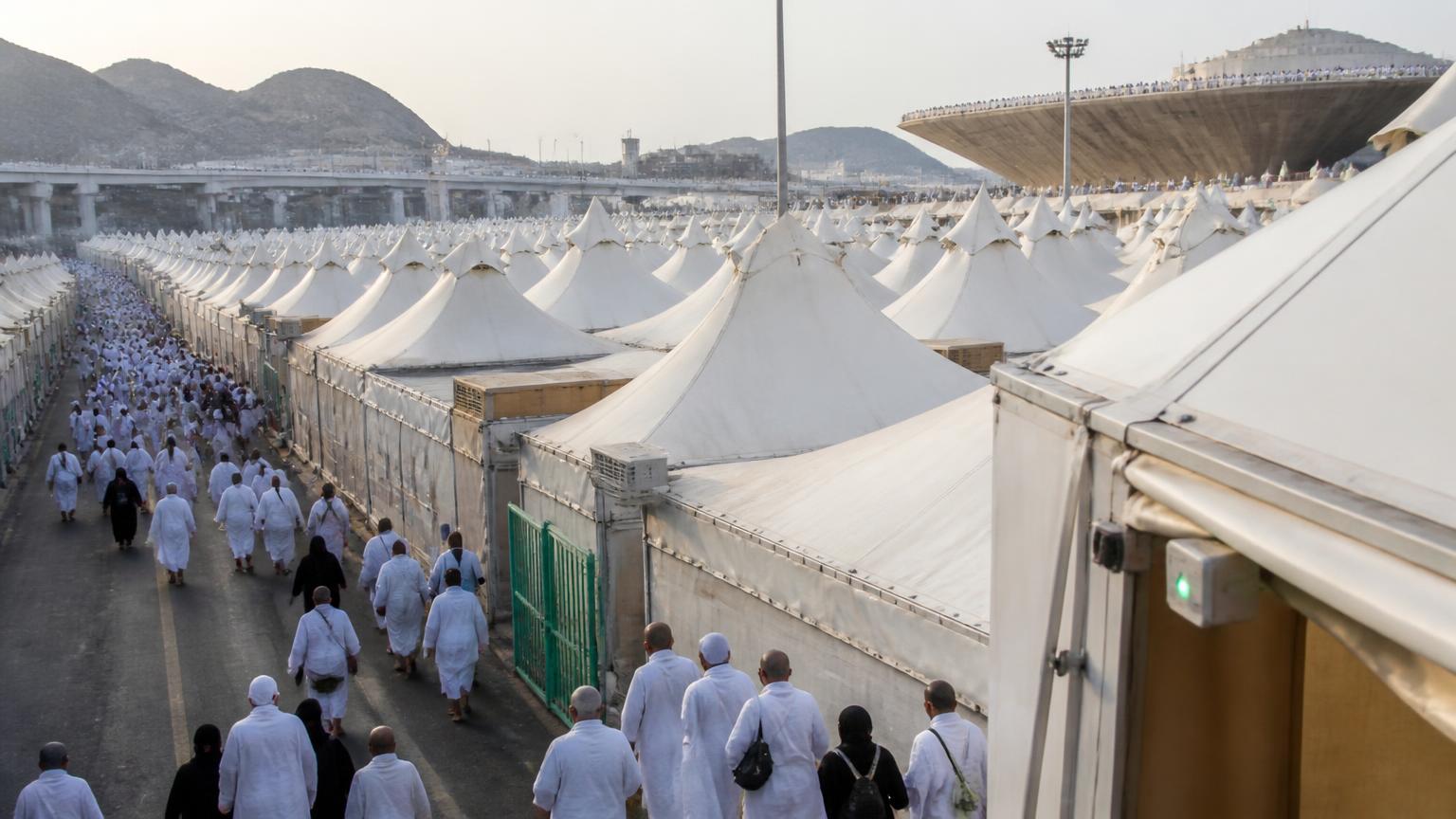
Hajj is the largest annual gathering of people on Earth — more than two million pilgrims moving together through Mina, Arafat and the Jamarat within hours of each other. AFAQY's crowd detection system gives authorities a live, AI-measured picture of density and flow at every critical point, so congestion is managed before it becomes danger.
The challenge
The pilgrimage follows a fixed timetable across fixed geography: the day at Arafat, the night in Muzdalifah, the stoning ritual at the Jamarat, the tents of Mina. Every pilgrim must move through the same points in the same windows of time. The margin for error is zero — crowd density can shift from comfortable to critical in minutes, and the people at risk are elderly pilgrims, first-time visitors, and families from a hundred countries who do not read the same signs or speak the same language.
What we built
AFAQY deployed AI crowd-detection cameras across the three critical sites, counting people in real time, measuring density per square meter, and tracking flow direction and speed across gates, walkways and the Jamarat bridge levels. For the Mina tent camps, we added RFID access readers at tent entrances to confirm that each pilgrim reaches his assigned camp and to verify adherence to the dispatching schedule. Inside the tents, air-quality sensors continuously monitor conditions for healthier, safer accommodation throughout the pilgrimage.
How it runs during Hajj
In the unified command center, the holy sites appear as a living map: green, amber and red zones updating continuously as millions move. When a corridor trends amber, stewards are dispatched to open overflow routes and redirect groups before the surge arrives. RFID records let operators confirm pilgrims are in their assigned camps and leaving on schedule, while air-quality readings inside tents trigger ventilation adjustments before comfort or safety is affected. Every alert, every decision and every movement is logged — building the evidence base that makes each Hajj safer than the last, in direct service of the Pilgrim Experience Program's goals.
- AI crowd detection
- RFID access readers
- Tent air-quality sensors
- Density heatmaps
- People-flow analytics
- Command center integration
- Edge processing
Quality of Life, the Saudi Green Initiative, and the Pilgrim Experience Program all depend on cities that can measure themselves. AFAQY deployments give operators the live evidence they need: violations captured, crowds protected, waste handled cleanly — reported in one platform, auditable end to end.
Use this story for high-density venues or time-critical journeys where crowd flow, authorized access and environmental conditions must be coordinated.
Relevant buyers
- Command Center lead
- Crowd safety director
- Venue operations
- Pilgrim or visitor experience lead
Opportunity signals
- Scheduled mass movement
- Occupancy limits
- Assigned access zones
- Temporary accommodation
Discovery questions
- 01Where can density change faster than teams can react?
- 02How is authorized access confirmed?
- 03Which environmental conditions affect visitor wellbeing?